Why does keeping business records matter?
Malaysian businesses are required to keep sufficient records to explain their income and expenses. If LHDN (the Inland Revenue Board) reviews or audits you, those records are how you back up what you filed. Good records also make your year-end, SST returns and financing applications far easier.
It's not just tax: a company (Sdn Bhd) must keep proper accounting records under the Companies Act 2016, and SST-registered businesses keep records for RMCD.
Which records should a business keep?
In practice, keep anything that evidences a transaction: sales invoices and receipts; purchase invoices and bills; payment vouchers and bank statements; contracts and agreements; your ledgers and financial statements; and supporting documents like delivery orders and credit notes.
If you're SST-registered, keep your tax invoices and SST-02 returns. If you issue e-Invoices, keep the validated e-Invoices (with their LHDN unique identifier) alongside the rest.
How long should business records be kept?
The widely-applied rule is seven years. The Income Tax Act 1967 requires business records to be retained for seven years from the end of the year the records relate to; the Companies Act 2016 also requires accounting records to be kept for seven years.
Because the exact period and any exceptions depend on your situation, confirm with LHDN or a licensed tax agent, but seven years is the safe baseline most Malaysian SMEs work to.
Can business records be kept digitally?
Records don't have to be paper. Properly kept digital records are acceptable, and they're easier to search, back up and produce on request. The key is that they're complete, accurate and retained for the required period.
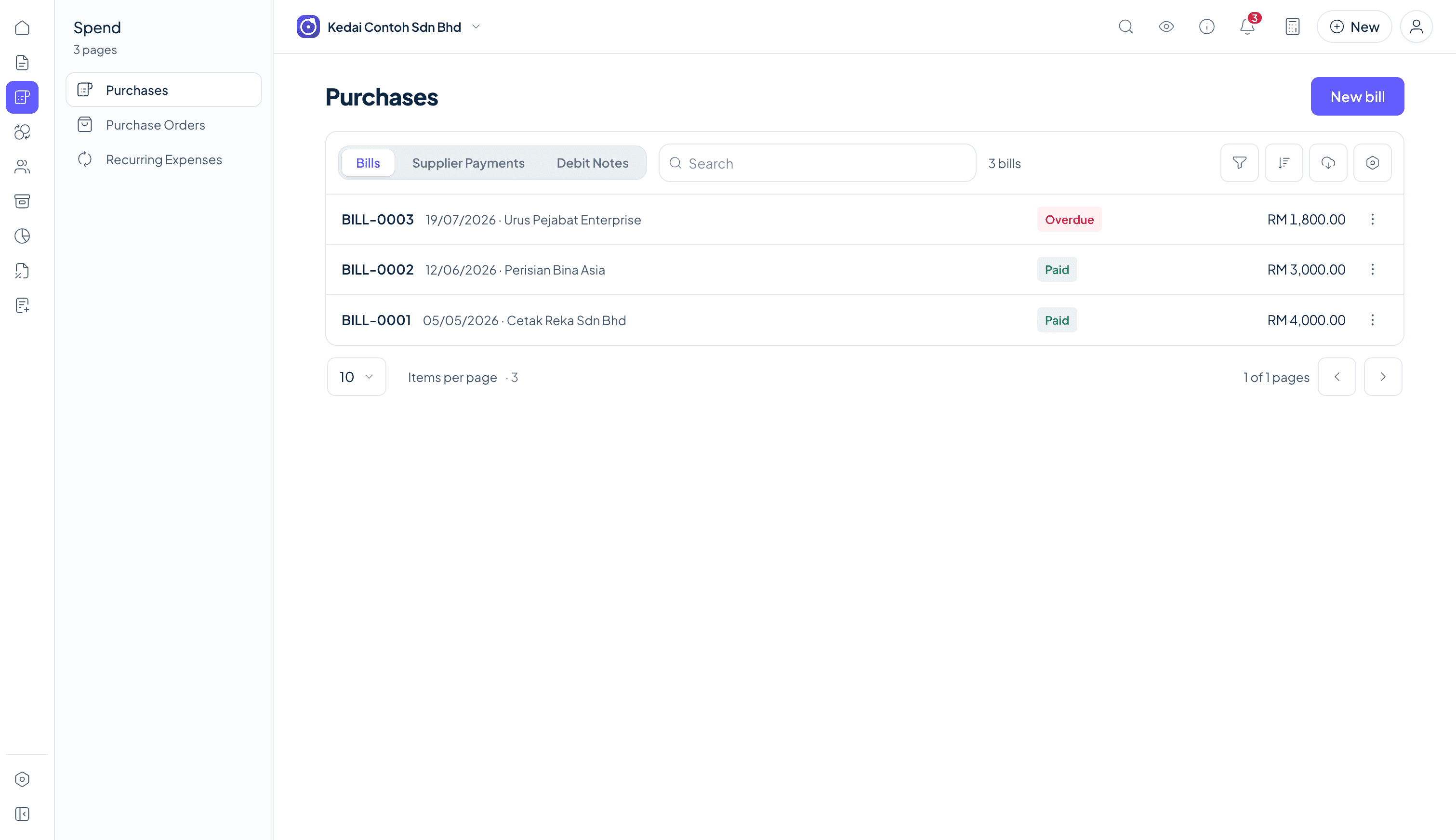
This is where bookkeeping software helps: every invoice, receipt and ledger entry is captured and kept together, so a seven-year history isn't a shoebox of paper. It's a file you can search in seconds.