What is the difference in one line?
A quotation is a price offer before a sale. An invoice is a request for payment after you've agreed to supply. A receipt is proof that payment was received. Same customer, three different moments.
What is a quotation?
A quotation (or quote) tells a customer what something will cost before they commit. It's not a demand for payment and it doesn't record a sale in your books. It's a proposal. Good quotations show the scope, the price, any tax, and how long the price is valid.
When the customer accepts, the quotation usually converts into an invoice.
What is an invoice?
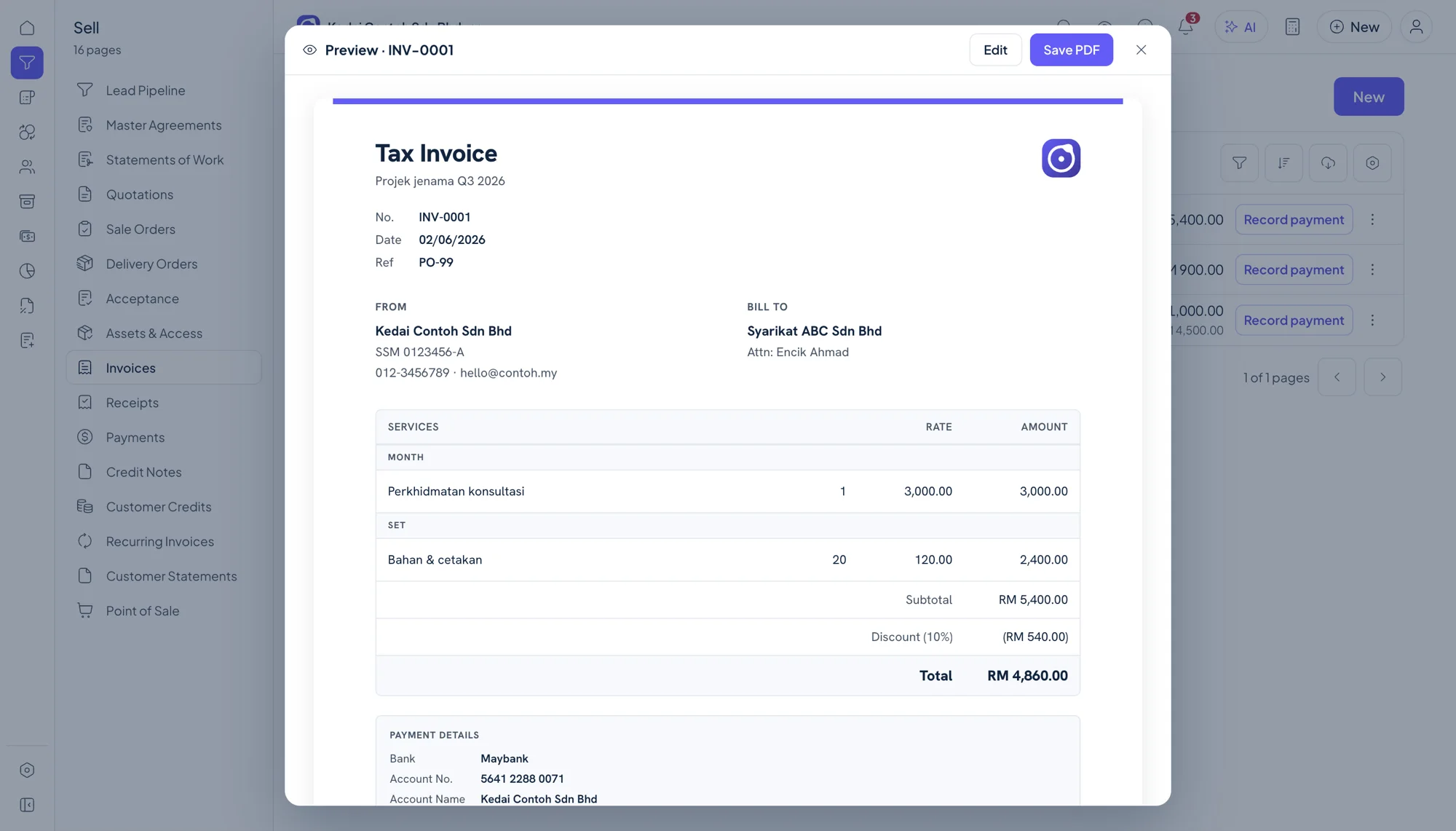
An invoice is issued once you've agreed to supply goods or services. It requests payment, states what's owed and by when, and is the document that matters for tax. It carries your SST treatment and is what gets submitted for e-Invoice (MyInvois) when that applies to you. An invoice creates a receivable: money the customer now owes you.
Keep every invoice; it's a core business record.
What is a receipt?
A receipt confirms that payment has been received. You issue it after the customer pays, as their proof of payment. An invoice says 'please pay'; a receipt says 'paid, thank you'. For part-payments you can issue a receipt for the amount actually received.
Don't confuse the two: an unpaid invoice is not a receipt, and a receipt on its own doesn't explain what was sold.
How do the documents flow together?
The usual order is: quotation → (customer accepts) → invoice → customer pays → receipt. Not every sale needs a quotation (walk-in retail often goes straight to invoice or receipt), but the invoice-then-receipt pair is the backbone.
Where e-Invoice fits: it's the invoice that goes to MyInvois for validation, not the quotation or the receipt. Good software carries a quote through to an invoice and then records the payment and receipt, so nothing is re-typed.