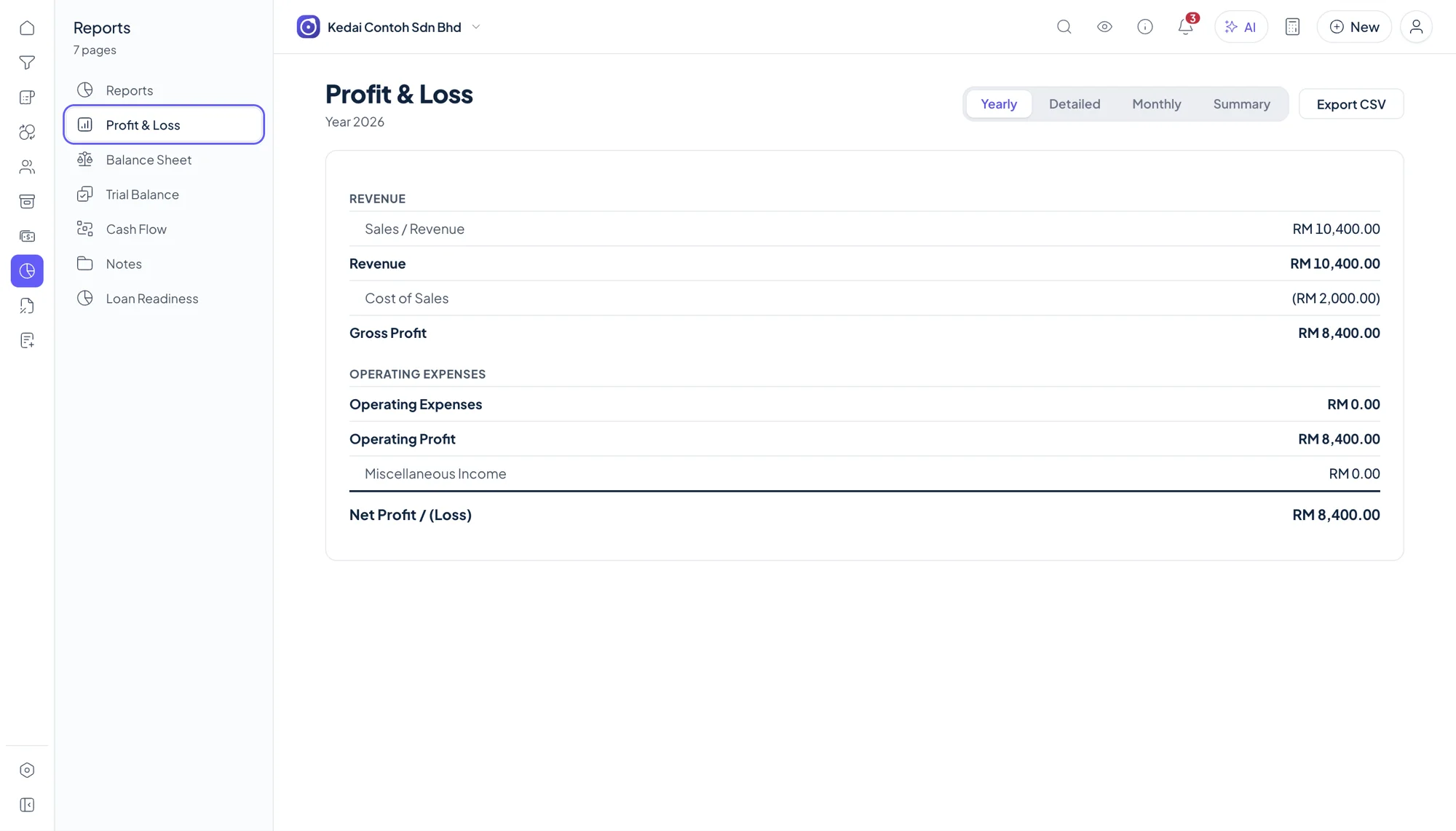
What does a Profit & Loss statement show?
A Profit & Loss statement (also called an income statement) shows whether you made money over a period: a month, a quarter or a year. In one line: revenue minus expenses equals profit. It answers 'did the business make a profit, and where did the money go?'.
It's different from a balance sheet, which is a snapshot of what you own and owe at a single point in time. The P&L is the movie; the balance sheet is the photo.
Which Profit & Loss lines matter most?
Revenue (or sales): the money you earned from selling, before any costs. Cost of goods sold (COGS): what those sales directly cost you: stock, materials, direct labour. Gross profit: revenue minus COGS, i.e. what's left after the direct cost of what you sold. Operating expenses: the running costs that aren't tied to a single sale: rent, salaries, marketing, software, utilities. Net profit: what's left after all expenses. This is the bottom line.
How are gross profit and net profit different?
Gross profit tells you whether your pricing and direct costs work: if it's thin, you're not charging enough or your materials cost too much. Net profit tells you whether the whole business works after overheads.
A business can have healthy gross profit but negative net profit if its rent, salaries and other overheads are too high. Watch both.
How should you use a Profit & Loss statement?
Look at margins, not just totals. Gross margin (gross profit ÷ revenue) and net margin (net profit ÷ revenue) tell you how much of each ringgit you keep. Compare month to month to spot trends: rising costs, slipping margins, a seasonal dip.
Use it to make decisions: which products actually make money, whether a price rise is needed, where costs are creeping. Software that computes the P&L live from your entries means you're always looking at current numbers, not a stale export.